

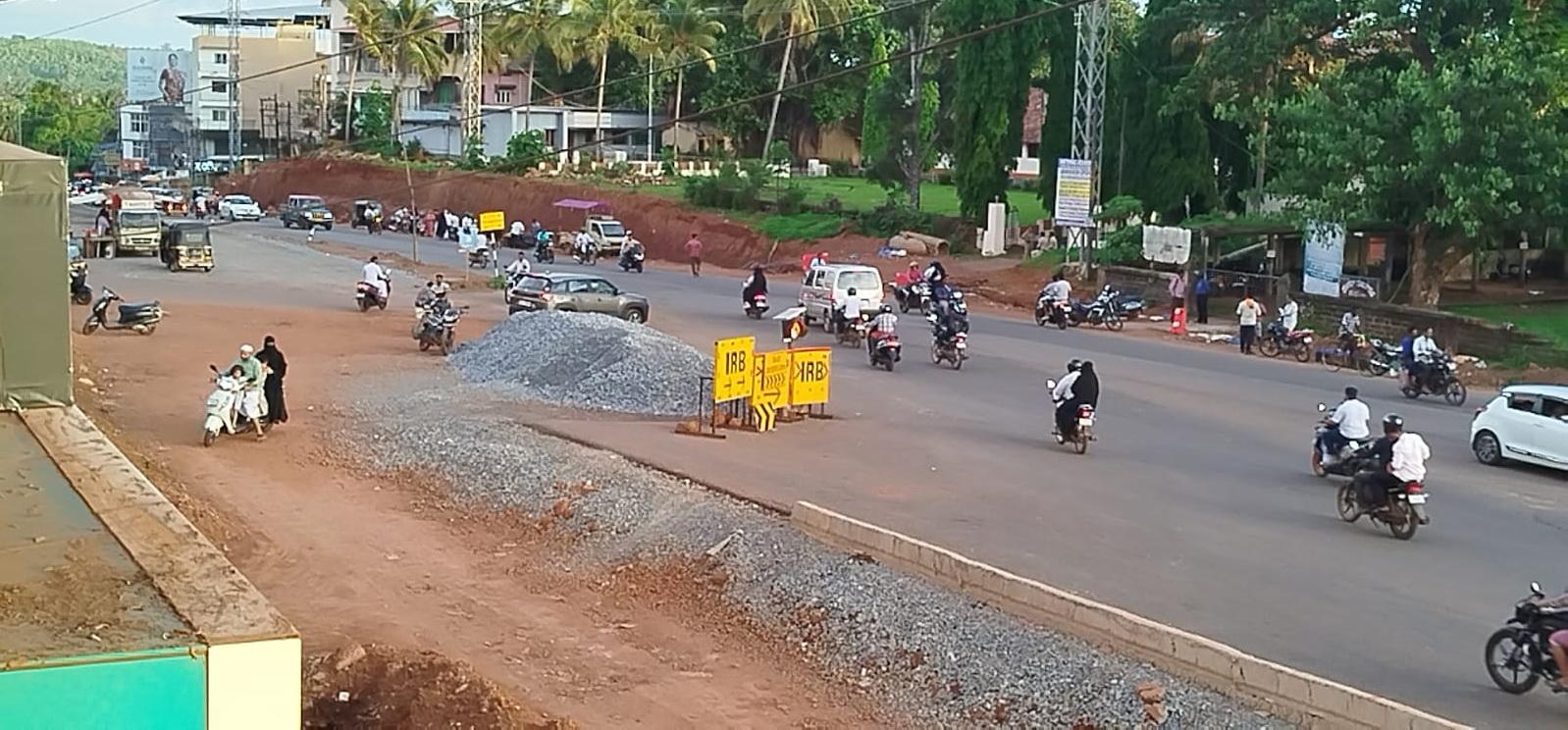
Bhatkal: A recent Supreme Court judgment declaring safe footpaths a fundamental right has brought renewed attention to long-standing concerns over inadequate pedestrian infrastructure along National Highway 66 in Uttara Kannada district, where residents of several towns and villages continue to struggle with the absence of service roads, footpaths, and safe crossing facilities.
The ruling came in a case involving the death of a five-year-old boy who was fatally struck by a truck while walking on a footpath holding his father's hand. While hearing a compensation dispute arising from the incident, the apex court observed that well-maintained and clearly demarcated footpaths are not merely civic amenities but an essential component of citizens' fundamental rights. The court further emphasized the need for a legal framework and accountability mechanisms to ensure pedestrian safety.
The Supreme Court noted that walking safely is a basic human activity and an integral part of life. It expressed concern that urban planning and infrastructure development often prioritize vehicular movement while neglecting the needs of pedestrians, including children, senior citizens, and persons with disabilities.
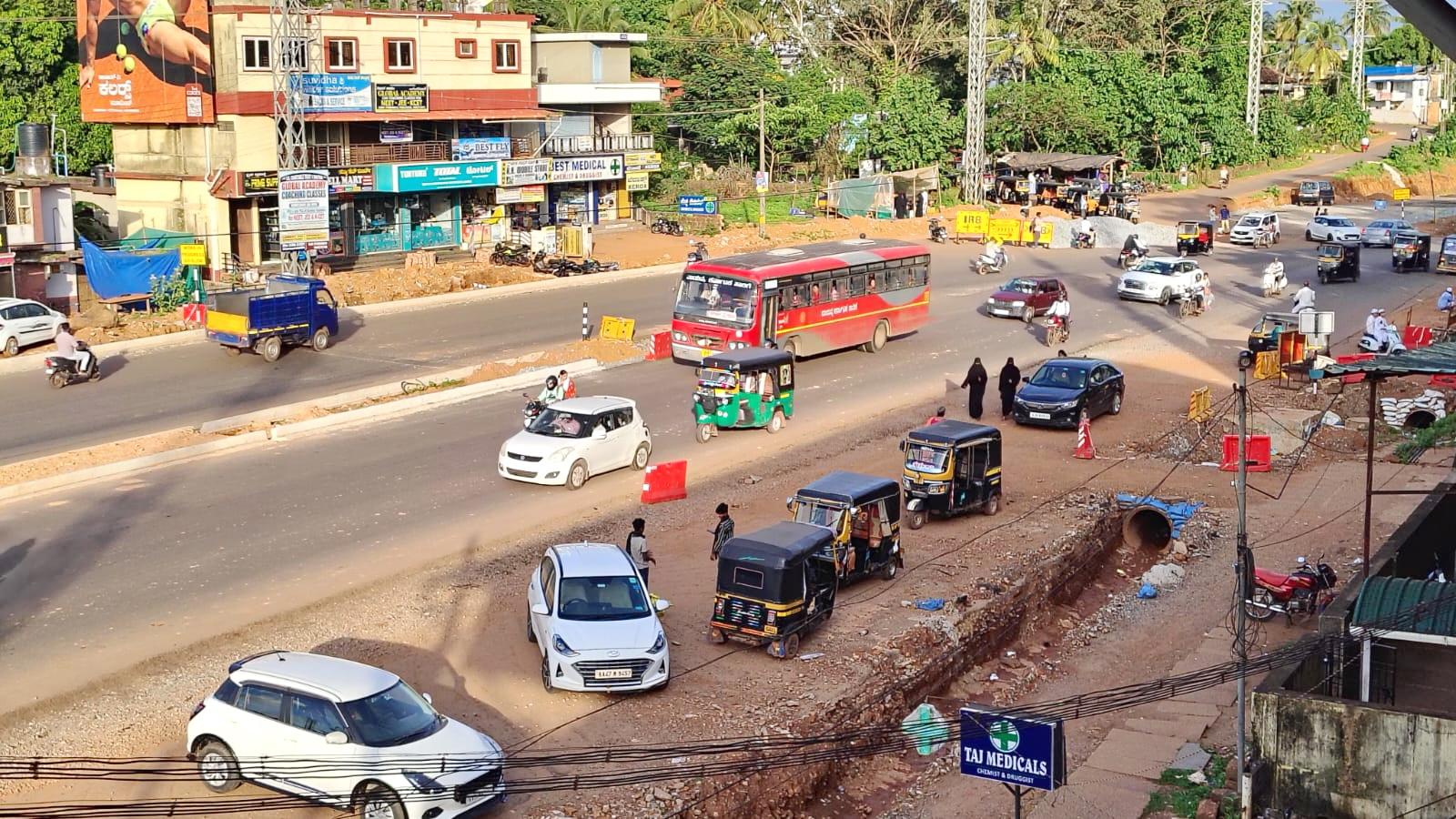
The observations have particular relevance for Uttara Kannada district, which accounts for nearly half of Karnataka's 294-km stretch of National Highway 66. Of the total highway length in the state, around 142 km passes through the district, including approximately 30 km in Karwar, 25 km in Ankola, 32 km in Kumta, 27 km in Honnavar, and 28 km in Bhatkal.
Despite the massive scale of the highway expansion project, concerns over the lack of service roads and pedestrian infrastructure remain unresolved across several stretches. Significantly, the National Highways Authority of India (NHAI) has not publicly specified any clear benchmark regarding the extent of service roads and footpaths to be provided alongside the highway.
Available estimates indicate that service roads have been constructed only in limited stretches—about 8 to 10 km in Karwar, 6 to 8 km in Ankola, 10 to 12 km in Kumta, 6 to 8 km in Honnavar, and 10 to 15 km in Bhatkal. Large portions of the highway, however, continue to remain without service roads or dedicated pedestrian facilities, forcing local residents to share space with high-speed traffic.
In Bhatkal, demands for service roads in areas such as Shirali have remained pending for years despite repeated representations from local residents. Several communities located along the highway continue to seek safer access roads and pedestrian facilities, arguing that the expansion project has increased vehicle speeds without adequately addressing local mobility needs.
Residents have also raised concerns over incomplete infrastructure works, including underpasses at Kaikini Basti and Mood Bhatkal. The public has also long demanded an underpass connecting Kidwai Road with the Bhatkal railway station area, where hundreds of pedestrians are required to cross the highway every day. However, that demand too remains unaddressed. The unfinished projects have made it difficult for pedestrians and motorists to cross the highway safely, compelling many to take risky routes across busy traffic lanes.
Local residents say that while NH-66 has undoubtedly improved regional connectivity and facilitated faster movement of vehicles, the benefits have not been matched by adequate safeguards for people living along the corridor. Schoolchildren, elderly residents, daily commuters, and small business owners are among those most affected by the lack of safe pedestrian infrastructure.
The Supreme Court's observations have now added a new legal dimension to these concerns. With the court recognizing safe pedestrian movement as a fundamental right, the continued absence of footpaths, service roads, and safe crossing facilities along several stretches of NH-66 could increasingly be viewed through the lens of citizens' rights rather than merely as an infrastructure shortcoming.
Legal observers note that the ruling may have wider implications for highway projects across the country. It reinforces the principle that development cannot be measured solely by wider carriageways and faster traffic movement. Public infrastructure, they argue, must also guarantee safety and accessibility for ordinary citizens.
The judgment has also revived questions about accountability. If accidents, injuries, or fatalities occur due to the absence of basic pedestrian facilities, authorities responsible for planning, constructing, and maintaining highway infrastructure may face greater scrutiny in light of the Supreme Court's observations.
For residents of Bhatkal and other parts of Uttara Kannada, the verdict has strengthened demands for the completion of pending underpasses, expansion of service roads, and provision of safe footpaths along NH-66. More broadly, it has reignited a debate over whether infrastructure development can truly be considered successful if ordinary citizens are unable to walk safely along the very roads built in the name of progress.